Creevelea Abbey
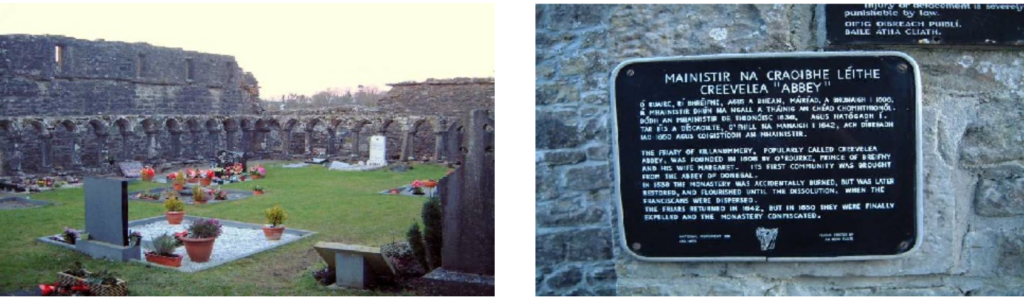
Creevelea Abbey, more accurately a Franciscan friary; was founded in 1508 by Owen O’Rourke, Lord of Breifne, and his wife Margaret O’Brien, daughter of the chieftain of Thomond. It was consecrated in 1511 and holds the distinction of being the last Franciscan friary established in Ireland before the suppression of the monasteries
Carraig Phádraig — Patrick’s Rock
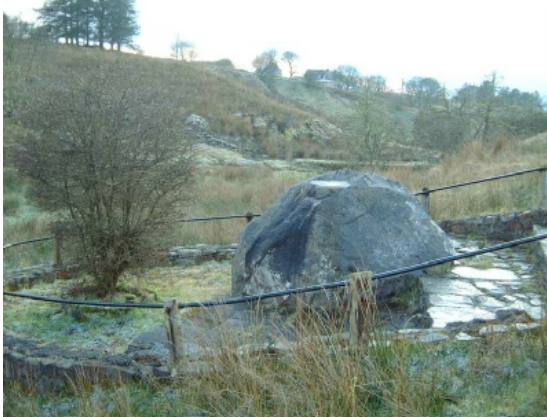
The friary was built on a rocky height overlooking the River Bonet, close to where the river flows into Lough Gill. This location was already considered sacred. Known as Carraig Phádraig (Patrick’s Rock), it is believed that St. Patrick spent time in Dromahair during his travels through North Connacht and built a small church on this very site.
Closure & Turbulent Times
Creevelea Abbey remained peaceful until around 1590, when Sir Richard Bingham, the English Governor of Connacht (ancestor of the missing Lord Lucan), attacked the region. His soldiers camped in the Abbey, using the church timbers for firewood and destroying a precious carved wooden image of St. Francis praying before the cross. Despite this devastation, the Franciscans continued to serve the area for another fifty years. In 1642, they briefly returned to the Abbey, but by 1650, during Cromwell’s campaign, they were forced to leave Dromahair and move to Ballinrobe. Among the friars remembered from this period are Fr. P. P. Cawmen (a native of Ballinrobe), Fr. John Sweeney, Fr. James Bourke, Fr. Charles Reynolds, and Brother Denis Gorman.
Bishop Thady O’Rourke
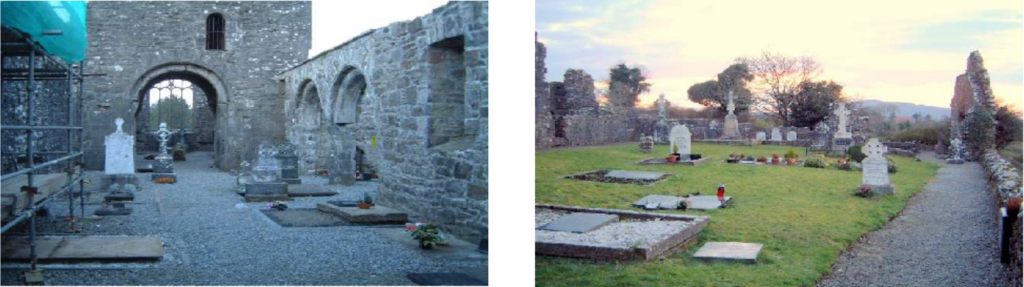
Beside the altar lies a tombstone carved with a mitre, crozier, and mitred head — the resting place of Bishop Thady O’Rourke, Bishop of Killala from 1707 to 1734, a descendant of the O’Rourkes of Breifne. At that time, only two bishops remained in the north of Ireland — one deceased and the other, Bishop Dromby of Down, imprisoned in Dublin’s Newgate Prison. Bishop Dromby secretly consecrated Thady O’Rourke as bishop. Because of the Penal Laws, Bishop O’Rourke spent much of his life in exile. Tradition says he lived in a humble cabin near Creevelea Abbey, where he died in poverty. In 1724, he commissioned a beautiful chalice, now preserved at Clonalis House, County Roscommon.
Graves & Burials
Beside the altar lies a tombstone carved with a mitre, crozier, and mitred head — the resting place of Bishop Thady O’Rourke, Bishop of Killala from 1707 to 1734, a descendant of the O’Rourkes of Breifne. At that time, only two bishops remained in the north of Ireland — one deceased and the other, Bishop Dromby of Down, imprisoned in Dublin’s Newgate Prison. Bishop Dromby secretly consecrated Thady O’Rourke as bishop. Because of the Penal Laws, Bishop O’Rourke spent much of his life in exile. Tradition says he lived in a humble cabin near Creevelea Abbey, where he died in poverty. In 1724, he commissioned a beautiful chalice, now preserved at Clonalis House, County Roscommon.
Graves and Burials
The founders, Owen and Margaret O’Rourke, were said to have been buried in a magnificent tomb near the altar, visible until the late 19th century but now lost. The oldest surviving grave in the Abbey dates to May 22, 1721, commemorating Hugh O’Rork and Catherine McGowan. Their stone bears carvings of a cross, lamb, and diamond. Two Franciscan priests of Killargy; Fr. John O’Rorke, Parish Priest of Killargy, and Fr. Peter Magauran, P.P. 1724–1837; are buried here. Fr. Magauran, a Canon of Achonry, was known for his leadership in local affairs. Near the altar rests Bishop Maguire of Ballinaglera, and outside the west wall lie the graves of the O’Donnell family of Larkfield, descendants of the O’Donnells of Donegal.
Carrowcrin Cemetery
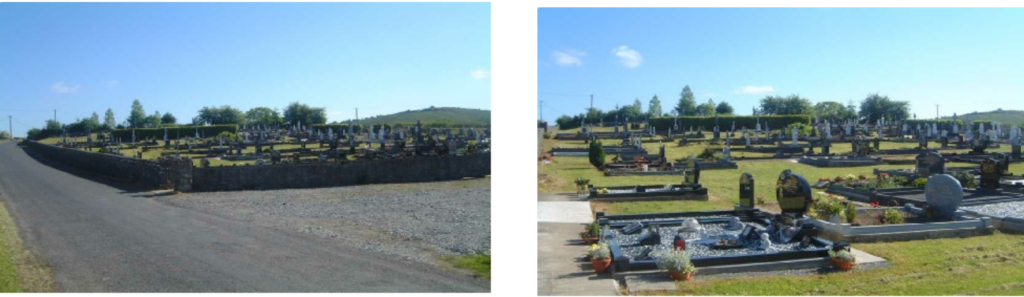
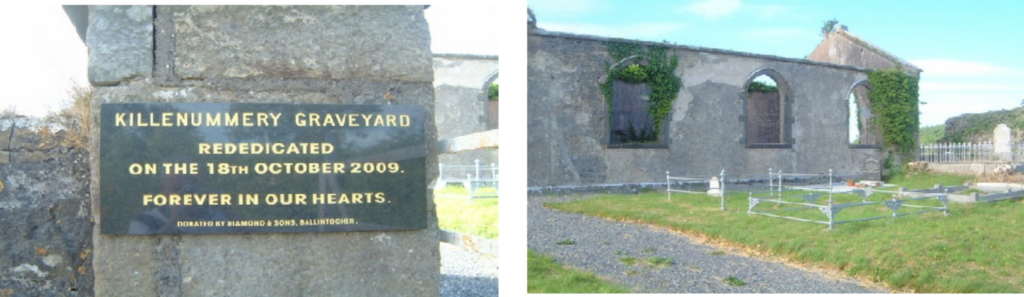
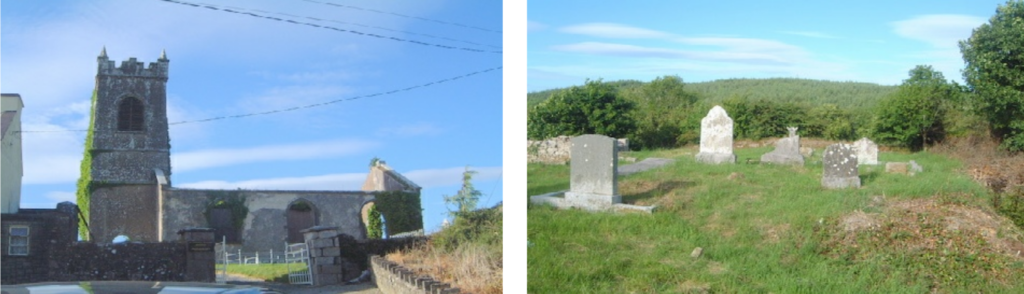
Killenummery Old Church and Roman Catholic Graveyard
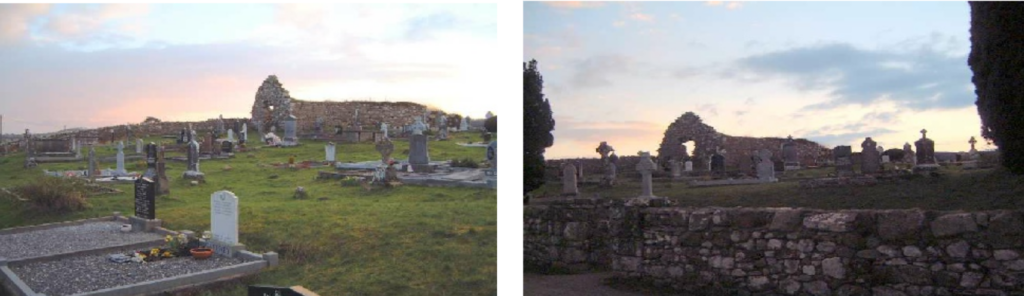
Killery Burial Ground
Information and photography courtesy of Fr. Vincent Connaughton , 2010